NFTAMA Blog
The Growth Loop in NFTAMA: From Sign-Up to a Strong Portfolio
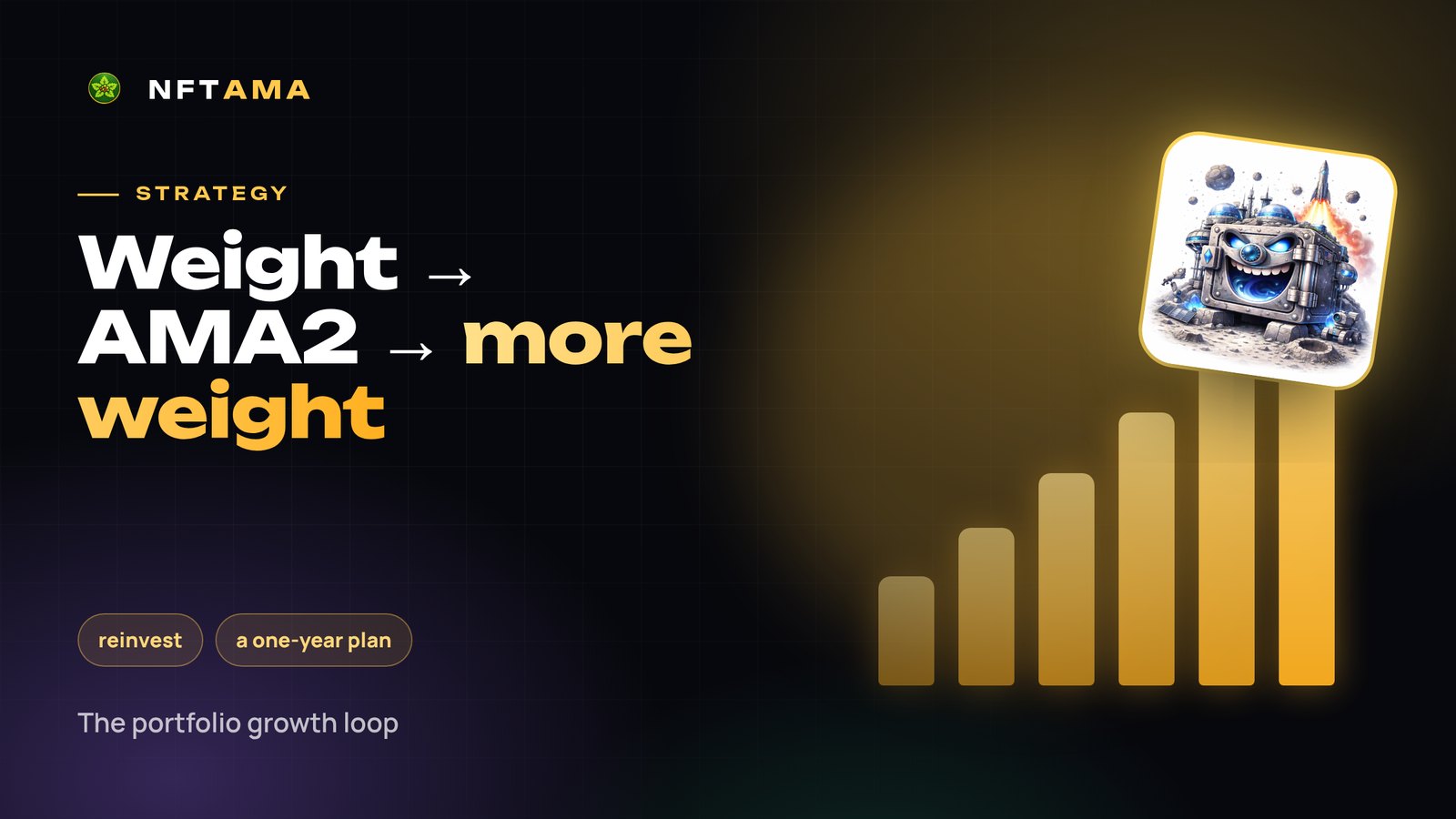
NFTAMA is built around a simple loop: weight earns AMA2 → AMA2 go into new weight → the next reward is bigger. Rewards can be withdrawn too, but reinvesting is what makes a portfolio stronger over time. Below is how to go through the loop stage by stage.
In short: the first month — free sources and a first safe; then — regular purchases in the first minutes, keys and levels on your heaviest safes; by the end of the year — the mint, the AMA2 lock and your account level.
Stage 1. The first month
- Confirm your e-mail: a demo safe, a key for confirming and the safe of luck.
- Buy your first safe in the first minutes of its life — it gets ×1.5 weight forever.
- Log in every day: a login streak gives keys on days 7, 15 and 30.
- Complete the Newcomer challenge: e-mail, withdrawal wallet and a first safe within 7 days.
Stage 2. The first three months
- Buy regularly. Each purchase gives you a share of the price of every next safe for 30 days (the fresh pool).
- Set up auto-buy at the start price — the best price of 1 AM without being on duty.
- Keys go on your heaviest safe, then levels on the same safe: each level adds +8% × quality of the already boosted weight.
Stage 3. Six months to a year
- Mint. Fresh heavy safes of different classes give a chance of Silver or Gold.
- The AMA2 lock. Put money you won't need for a month away for 30–90 days: the tokens come back with a key.
- Account level. Up to 10% cashback, up to 30% off mints, more rules and safe of luck attempts.
- Growth and capacity. Make sure your best safes don't hit their ceiling — expand them.
How to decide where the next AMA2 go
| Situation | Best step |
|---|---|
| An unused key | Apply it to your heaviest safe with room to its capacity |
| A heavy or Silver/Gold safe | A level: ≈8.7 AMA2 per AM against 14.57 on the showcase |
| Only light safes | A new safe in its first minutes |
| A full safe | A capacity expansion |
| AMA2 not needed for a month or more | The lock for 30–90 days |
If your weight stands still while the network grows, your share shrinks. The loop works while you add weight at least as fast as the network. The AMA2 rate can move either way meanwhile.
Try it for free
Signing up takes a minute: a login, an e-mail and a password, no documents and no wallet. After confirming your e-mail you get a demo safe that starts earning AMA2 right away, and the safe of luck.
A first-month plan by budget is in the guide: “Getting started”.