How to Choose an NFTAMA Safe Before You Buy
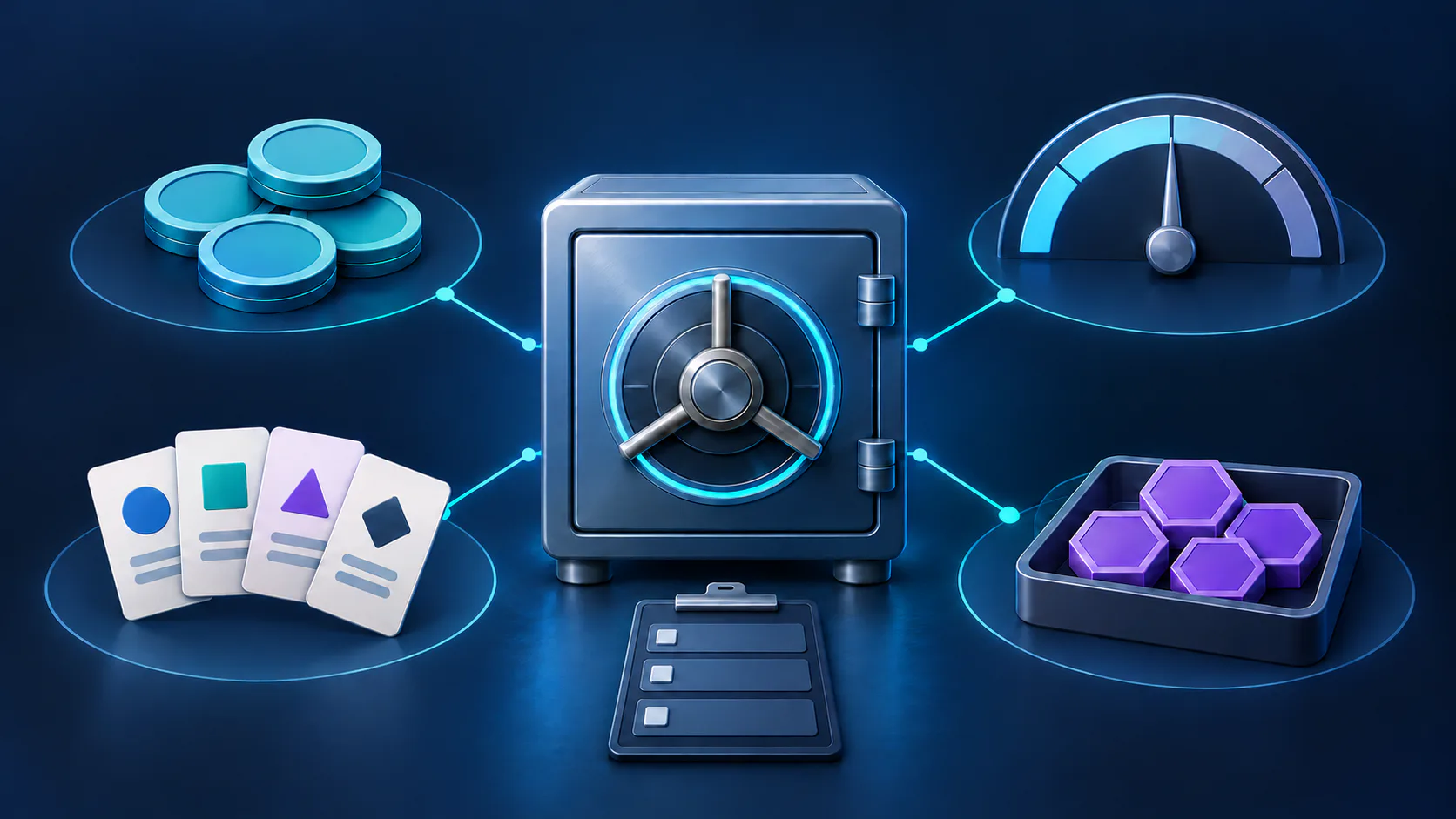
Use a same-time worksheet to compare NFTAMA safes by current price and weight, attributes, acquisition route, development requirements and portfolio fit.
Choose an NFTAMA safe by the job it needs to perform, its complete known resource requirement and its current state—not by the lowest price or highest weight alone. Capture competing safes during the same session, compare them in one worksheet and proceed only if the selected candidate still fits your purchase and development limits at confirmation.
Start with fit, not one headline number
First decide what the safe should add to your portfolio. A first-safe purchase, an immediate increase in current weight and a candidate intended for later development are different jobs. Treat the goal as a filter, not as a claim that one strategy produces a better financial outcome.
Set two boundaries before comparing listings: the amount available for the purchase and the AMA2 you are prepared to use for planned development. Keeping them separate prevents a lower purchase price from hiding a larger upgrade requirement.
NFTAMA’s official documentation describes safes through their weight, class, quality, series, level, age and history. Record those fields together rather than choosing on price or weight alone. Review the definitions in how NFTAMA virtual safes work.
| Worksheet field | Record for each candidate |
|---|---|
| Purpose | First safe, more current portfolio weight, an upgrade candidate or a safe needed for a documented minting plan |
| Identity | Safe ID, opening or internal-market route, and capture time |
| Current terms | Displayed purchase amount, payment asset and current weight |
| Safe state | Class, quality, series, level, age and available history |
| Development plan | Intended upgrades or minting use and their currently displayed AMA2 requirements |
| Limits | Maximum purchase amount and a separate AMA2 development limit |
| Alternative | Another candidate, upgrading an owned safe or waiting |
Copy the worksheet for Candidate A and Candidate B. Capture both in the same session because openings and internal-market listings can change.
Choose the acquisition route before comparing candidates
A new opening is time-sensitive. NFTAMA documents the current epoch as setting its starting and ending price, starting and ending weight, lifetime and interval between openings. Compare the values shown in the live opening rather than carrying forward an undated example.
An internal-market safe should be assessed in its existing state. Its age, level, quality and available history can provide more context, but prior development does not automatically make it the better fit. Compare what it provides now with the resources still needed for your plan.
After selecting an opening candidate, use NFTAMA’s separate guide to buying during a new sale window for the transaction flow.
| Criterion | New opening | Internal market |
|---|---|---|
| Price and weight | Both change during the opening within the current epoch’s ranges. | Use the listing’s current displayed price and weight. |
| Timing | Limited by the opening lifetime and availability. | Depends on whether the listing remains active. |
| History | Begins as a newly issued safe after purchase. | May show existing ownership, value and development history. |
| Development state | Starts in its issued configuration. | May already have age or upgraded levels. |
| Payment asset | NFTAMA’s Quick Start describes new-safe purchases in BNB. | The White Paper documents AMA2 settlement for internal P2P deals; verify the live listing. |
| Final check | Refresh the opening’s price, weight and remaining availability. | Refresh the listing, safe ID and current terms. |
Compare price with current weight—without treating the result as ROI
Official NFTAMA materials use both “safe weight” and “AM weight.” Record the numeric weight exactly as displayed for each candidate and use the same field throughout your comparison.
A simple normalization is: displayed purchase amount ÷ current displayed weight. The White Paper also presents price per unit of weight as a way to compare an opening at a particular moment. The hypothetical figures below illustrate the arithmetic; they are not current offers.
The ratio answers one narrow question: how much of the payment asset is required for each unit of current displayed weight in that snapshot. It does not predict AMA2 distributions, token prices, liquidity or resale proceeds.
- Candidate A: 0.60 BNB ÷ 12 AM = 0.050 BNB per current AM.
- Candidate B: 0.75 BNB ÷ 18 AM ≈ 0.0417 BNB per current AM.
- Candidate A requires less BNB immediately; Candidate B has the lower snapshot cost per current AM.
- The calculation does not account for class, quality, level, age, history, upgrade requirements or portfolio role.
Use this calculation only for candidates recorded at approximately the same time and priced in the same asset. Do not convert BNB and AMA2 using an assumed rate.
Read the safe as a complete current state
The NFTAMA White Paper separates primary-opening formulas from the age mechanics of an owned safe. This resolves the apparent difference between falling price and weight during an opening and age-related strengthening after purchase.
For upgrades, the White Paper currently gives the weight formula as new weight = current weight + current weight × 0.08 × quality modifier. Use the specific safe’s current interface quote before acting, because its present level and quality affect the comparison.
- Class: determines the series, class name, drop chance and range of the weight modifier under the White Paper’s current description.
- Quality: acts as a multiplier in the documented safe-upgrade formula. Review it together with the current weight and planned upgrades.
- Series: record the displayed series as part of the safe’s identity; do not assign it a separate effect unless the current rules do so.
- Level: can be increased with AMA2. The White Paper states that each level increases weight and that upgrade cost rises with successive levels.
- Age: strengthens an owned safe through documented age stages. Treat it separately from the countdown of an unsold opening.
- History: use the available value and ownership history to understand the safe’s current state, not to forecast its future result.
There are two separate time contexts. During an unsold opening, price and weight move from the epoch’s starting values toward its ending values. After purchase, the safe becomes a user asset and NFTAMA’s owned-safe age mechanics apply.
Build the complete known resource plan
Purchase price is only one part of the decision. Your worksheet should also show the resources required to put the safe to its intended use.
NFTAMA’s White Paper documents AMA2 as the resource for safe upgrades and internal P2P settlement. NFTAMA beginner setup explains BNB funding and the BSC/BEP-20 network requirement. The live confirmation screen remains the source for the amount you are about to approve.
- Record the purchase amount in the asset shown for the opening or listing.
- Add only transaction charges displayed before confirmation; do not estimate an unpublished amount.
- If funding requires an external BNB Smart Chain transfer, include the BNB needed for the applicable network fee.
- For a planned upgrade, record the current AMA2 quote and displayed weight change for that safe.
- For a minting plan, record only the resources and eligibility requirements shown in the current minting flow or official documentation.
- Keep BNB and AMA2 as separate totals unless you are using a live conversion quote.
- Compare the result with the confirmed resource requirement and weight change from upgrading a safe you already own.
Do not add expected rewards or an estimated resale price to the resource plan. They are not confirmed resources available for the purchase.
Apply the portfolio-fit test
For an existing user, the most relevant comparison may be a new purchase versus an upgrade to an owned safe. Put both choices through the same method: confirmed resources, documented change in weight and the role each option would serve.
A candidate adds useful portfolio fit when it meets the defined job without forcing another unplanned purchase or upgrade. That standard is more dependable than selecting the highest displayed weight automatically.
- Compare the candidate’s current weight with the role you defined at the start.
- Check whether an existing safe already serves that role and could be upgraded with fewer confirmed resources.
- When comparing an older upgraded safe with a new opening, use current weight, total known resources, level, quality, history and remaining options—not age or price alone.
- Count a safe toward a minting plan only when it satisfies the currently displayed requirements.
- Reject any candidate that exceeds either the purchase limit or the separate development limit.
Run the final confirmation gate
The final gate is a fresh check, not a repetition of the research. Its purpose is to catch any time-sensitive change between comparison and confirmation.
This method deliberately allows “not this candidate yet” as an outcome. The original purpose and limits remain the decision criteria even when an opening or listing is time-sensitive.
- Refresh the opening or listing instead of relying on an earlier screenshot.
- Match the safe ID and acquisition route to the worksheet.
- Recheck the live price, payment asset and complete displayed amount.
- Recheck the current weight, class, quality, series, level and age.
- Review the displayed value, ownership or development history where available.
- Confirm the intended NFTAMA account and any wallet details involved in funding.
- For an external transfer, verify BNB Smart Chain/BEP-20 and the applicable network fee.
- Confirm that the candidate still satisfies its purpose, purchase limit and development limit.
- If a material term changed, return to the worksheet before confirming.
Confirm only when the live candidate still matches the comparison. A changed identity, price, weight or resource requirement reopens the decision.
FAQ
Which matters more when comparing NFTAMA safes: price or current AM weight?
Neither should decide alone. Compare candidates captured at the same time by dividing each displayed purchase amount by its current displayed weight, provided both use the same payment asset. Then review class, quality, level, age, history, development requirements and portfolio role. The resulting cost-per-current-AM figure is a snapshot comparison, not a reward or resale forecast. See how NFTAMA virtual safes work.
What do class, quality, series, level and age mean on an NFTAMA safe?
Class determines the range of the safe’s weight modifier and is associated with its series. Quality modifies the documented effect of an upgrade, while level can be increased with AMA2. Age strengthens an owned safe according to NFTAMA’s age mechanics. Record the exact labels and current values shown for the candidate rather than ranking any field by itself. The NFTAMA White Paper documents these relationships.
Should I choose a new safe during an opening or one from the internal market?
Compare both routes during the same session. A new opening has time-sensitive price and weight controlled by the current epoch. An internal-market safe has an existing state that may include age, levels and transaction history. Choose the candidate whose current terms and remaining development options fit your stated purpose and limits.
How does the current NFTAMA epoch affect a newly opening safe?
NFTAMA documents the epoch as setting a new opening’s starting and ending price, starting and ending weight, lifetime and interval between openings. Check the live opening because those parameters describe the current offer and may differ from earlier examples. They do not determine future token value or resale proceeds. See the official Virtual Safes guide.
What should I verify immediately before buying an NFTAMA safe?
Recheck the safe ID, acquisition route, live price, payment asset, current weight, class, quality, series, level, age and available history. Confirm the final displayed amount and intended account. If an external BNB Smart Chain transfer is required to fund the purchase, verify the BSC/BEP-20 network and allow for the applicable network fee, as explained in NFTAMA beginner setup.
The right NFTAMA safe is the one that performs a defined job within two boundaries: what you can commit to the purchase now and what you are prepared to use for documented development later. Compare candidates at the same time, keep BNB and AMA2 requirements separate, and treat current weight as one decision input rather than a prediction. If the live terms change, update the worksheet and compare again.
Ready to compare live options? Inspect the currently available NFTAMA safes and apply the worksheet to their current details before choosing.